
Plenary Speakers

Yi Shi
Nanjing University, China
Yi SHI currently serves as the Dean of the School of Microelectronics at Nanjing University. He received the B.S. degree in Physics from National University of Defense Technology, China, in 1983, and the Ph.D. degree in Physics from Nanjing University, China, in 1989. He joined Nanjing University in 1989, and was promoted to Professor in 1996. In 2002, he was honored with the National Science Foundation of China's Outstanding Young Scientist Award. Since 2006, he has held the distinguished position of Changjiang Professor. In 2025, he was elected as an academician of the Chinese Academy of Sciences in 2025. He is mainly engaged in research on nanostructured materials and the applications in microelectronic and optoelectronic devices.
Speech Title: Tactile Sensor Technologies for Embodied Intelligence
Abstract: Tactile sensors serve as the core hardware for embodied intelligence to achieve safe, precise, and autonomous interaction in the physical world. In response to the applications of embodied intelligence, the technical routes of tactile sensors are developing in a diversified manner. Various principles have their characteristics in terms of sensitivity, resolution, dynamic response, environmental adaptability, and cost, forming a complementary technological ecosystem. This report reviews and discusses the performance characteristics, integration paradigms, and engineering bottlenecks of current mainstream tactile sensors, and the expectation for the development of the next-generation tactile perception systems for embodied intelligence. Moreover, it presents the related research work of our research group in this field.
Abstract: Tactile sensors serve as the core hardware for embodied intelligence to achieve safe, precise, and autonomous interaction in the physical world. In response to the applications of embodied intelligence, the technical routes of tactile sensors are developing in a diversified manner. Various principles have their characteristics in terms of sensitivity, resolution, dynamic response, environmental adaptability, and cost, forming a complementary technological ecosystem. This report reviews and discusses the performance characteristics, integration paradigms, and engineering bottlenecks of current mainstream tactile sensors, and the expectation for the development of the next-generation tactile perception systems for embodied intelligence. Moreover, it presents the related research work of our research group in this field.
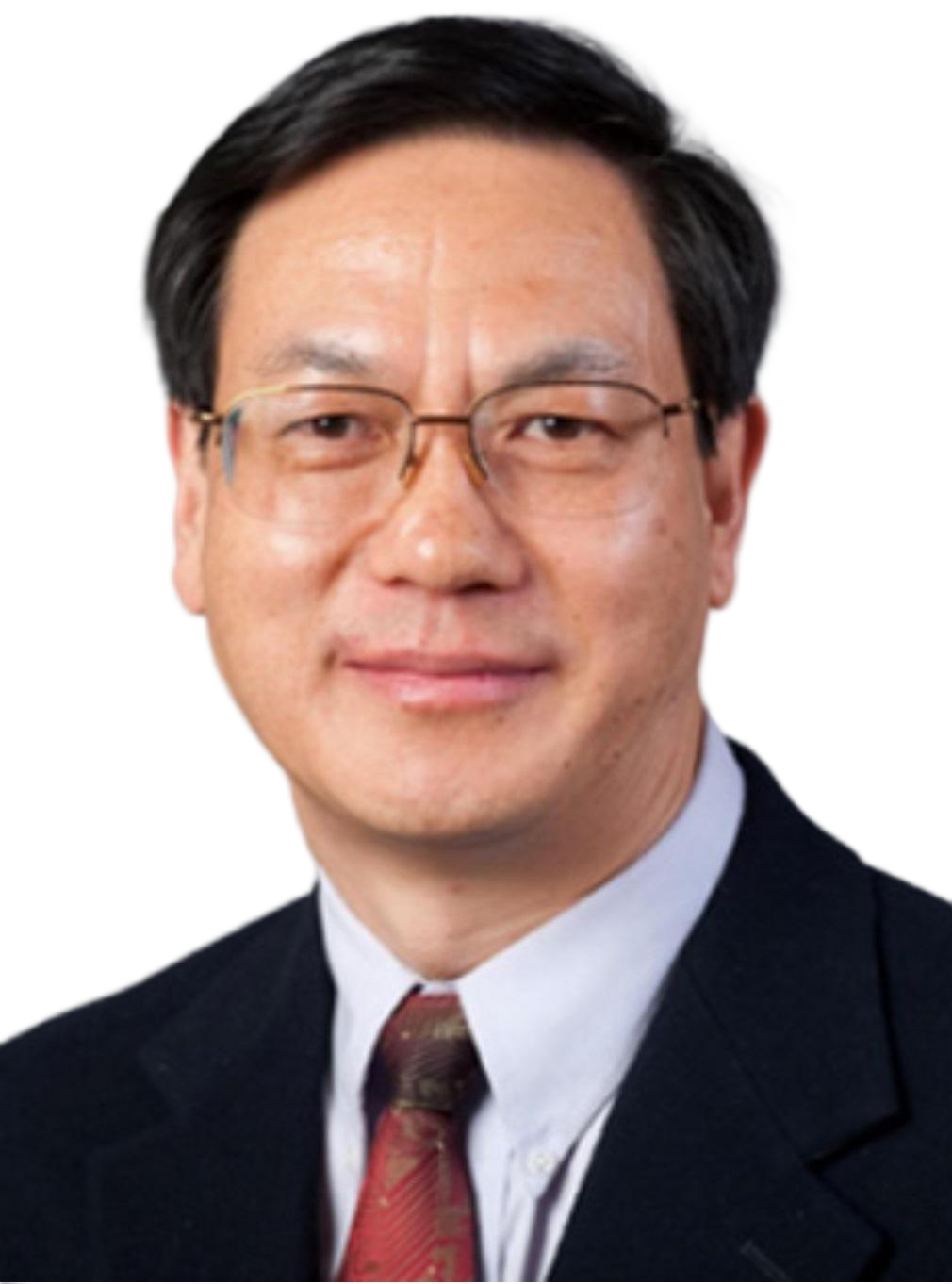
Zhonglin Wang
Beijing Institute of Nanoenergy and Nanosystems, CAS, China
TBA
Speech Title: Triboelectric Nanogenerators (TENG) for Sustainable Energy and Sensing
Abstract: Triboelectric nanogenerator (TENG) was invented by Wang’s group in 2012, which is based on the coupling of triboelectrification and electrostatic induction effects for converting mechanical energy into electric power. TENG is playing a vitally important role in the distributed energy and self-powered systems, with applications in internet of things, AL, environmental/infrastructural monitoring, medical science, environmental science, and security. TENG is most effective for utilization of high-entropy energy, which is the random, low-density, low-grade mechanical energy widely-distributed in our living environment and in nature. There are now over 22,000 authors distributed in 100 countries and regions around the globe who have published papers on TENG, and more than 14,000 papers have been published in the field. This presentation will first focus on the advances in fundamental science made due to the discovery of TENG. Then we will focus on the potential industrial impacts that have been made by TENG. We will show how this new field will benefit to the sustainable development of humankinds.
Abstract: Triboelectric nanogenerator (TENG) was invented by Wang’s group in 2012, which is based on the coupling of triboelectrification and electrostatic induction effects for converting mechanical energy into electric power. TENG is playing a vitally important role in the distributed energy and self-powered systems, with applications in internet of things, AL, environmental/infrastructural monitoring, medical science, environmental science, and security. TENG is most effective for utilization of high-entropy energy, which is the random, low-density, low-grade mechanical energy widely-distributed in our living environment and in nature. There are now over 22,000 authors distributed in 100 countries and regions around the globe who have published papers on TENG, and more than 14,000 papers have been published in the field. This presentation will first focus on the advances in fundamental science made due to the discovery of TENG. Then we will focus on the potential industrial impacts that have been made by TENG. We will show how this new field will benefit to the sustainable development of humankinds.

Seeram Ramakrishna
Tsinghua University, China
Academician Seeram Ramakrishna is Tsinghua Chair Professor, and Director of iWearables Center, Tsinghua University. He is a cross-fields pioneer advancing nanofibers for diverse applications. He is ranked 11 globally in the field of Nanoscience and Nanotechnology (Elsevier | Stanford list). He is named among the World’s Most Influential Minds (Thomson Reuters) and a Highly Ranked Scholar (Scholar GPS) with more than 500 Q1 journal papers, 225 H-Index, and 237,163 citations. His contributions also appeared in Nature, Nature Reviews Methods, Nature Communications, Matter, and so on journals. Highest professional distinctions include Fellow | Academician of Chinese Academy of Engineering; UK Royal Academy of Engineering (FREng); Singapore Academy of Engineering; Indian National Academy of Engineering; ASEAN Academy of Engineering & Technology; International Academy of Engineering and Technology; International Academy of Bionic Science; and World Academy for Artificial Consciousness (WACA). He is also an elected Fellow of AAAS, ASM International, ASME, AIMBE, USA; IMechE and IoM3, UK; ISTE, India; IUBSE (FBSE), and ISBE. He received a PhD from the University of Cambridge, UK, and TGMP from Harvard University, USA. He accumulated advanced research experiences from MIT and Johns Hopkins University, USA; KIT, Japan; and the National University of Singapore.
Speech Title: Towards Intelligent Wearables
Abstract: The wearables R&D worldwide is progressing towards collecting myriad information of human body and brain. Wearables made of fibrous materials are desired over the thin-film devices owing to their pliability, permeability, and touch comfort compatible to the human body. However, further progress is needed in terms of manufacturability, scalability, performance, sensitivity, intelligence, self-power, information storage, processing & communication, durability, systems integration, and cost. Advances in nanotechnology, meta-materials, quantum materials, intelligent materials, biomimetic sensors, AI, wireless communications, and fiber energy systems to be harnessed to realise future wearables. It is necessary to integrate cross-fields technologies such as nanofibers, smart materials, living materials, sensors, actuators, miniature energy systems, and artificial intelligence | consciousness | mind towards designing and developing intelligent wearables.
Abstract: The wearables R&D worldwide is progressing towards collecting myriad information of human body and brain. Wearables made of fibrous materials are desired over the thin-film devices owing to their pliability, permeability, and touch comfort compatible to the human body. However, further progress is needed in terms of manufacturability, scalability, performance, sensitivity, intelligence, self-power, information storage, processing & communication, durability, systems integration, and cost. Advances in nanotechnology, meta-materials, quantum materials, intelligent materials, biomimetic sensors, AI, wireless communications, and fiber energy systems to be harnessed to realise future wearables. It is necessary to integrate cross-fields technologies such as nanofibers, smart materials, living materials, sensors, actuators, miniature energy systems, and artificial intelligence | consciousness | mind towards designing and developing intelligent wearables.

Paul S. Weiss
University of California, Los Angeles, USA
TBA
Speech Title: Mimicking Nature: Controlling Charge, Heat, and Spin at Interfaces
Abstract: Many interactions and processes in nature operate at low energy and with critical energy balance, enabling repeated cycling and highly efficient transport. Inspired by these processes, we try to understand them, and to replicate them in synthetic systems. The energies involved are well below those of visible photon energies; thus, we predominantly use tunneling spectroscopies and imaging to probe them. If we could replicate such systems in our devices, we could save most of the energy required to run them. If we could mimic biochemical cycling, we could develop efficient recycling at large scales rather than the extremely labor- and energy-intensive processes of today. We look for underlying principles and what we are currently missing in our understanding. Two of the areas we are exploring are spin conservation in chiral molecules and the roles of polarizability in biological, and now synthetic, systems. Taking this perspective has already led to novel discoveries and inventions, including thermal control with orders of magnitude improvements, in scale, speed, and effect.
Abstract: Many interactions and processes in nature operate at low energy and with critical energy balance, enabling repeated cycling and highly efficient transport. Inspired by these processes, we try to understand them, and to replicate them in synthetic systems. The energies involved are well below those of visible photon energies; thus, we predominantly use tunneling spectroscopies and imaging to probe them. If we could replicate such systems in our devices, we could save most of the energy required to run them. If we could mimic biochemical cycling, we could develop efficient recycling at large scales rather than the extremely labor- and energy-intensive processes of today. We look for underlying principles and what we are currently missing in our understanding. Two of the areas we are exploring are spin conservation in chiral molecules and the roles of polarizability in biological, and now synthetic, systems. Taking this perspective has already led to novel discoveries and inventions, including thermal control with orders of magnitude improvements, in scale, speed, and effect.

Jürgen Brugger
Ecole Polytechnique Federale de Lausanne (EPFL), Switzerland
Jürgen Brugger is Professor of Microengineering at EPFL, co-affiliated with Materials Science. He leads the Microsystems Laboratory (LMIS1), where his research advances the science of micro- and nanomanufacturing with applications in MEMS, wearable systems, and biomedical devices. His work has been recognized with distinctions such as IEEE Fellow (2016), an ERC Advanced Grant (2017), MNE Fellow (2022), and election to the Swiss Academy of Engineering Sciences (SATW) in 2024. In my lab, I work closely with students and colleagues to develop new approaches in micro/nanofabrication and additive micromanufacturing. Mentoring and teaching are central to my work: I have supervised over 25 PhD students, many of whom have gone on to pursue successful academic and entrepreneurial careers. Seeing their progress and creativity is among the most rewarding aspects of my role. I am particularly interested about translating fundamental research into practice, whether through collaborations or start-ups emerging from the lab. For me, advancing manufacturing science goes together with training the next generation of engineers and scientists.
Speech Title: Beyond the Mask: Direct-Write Nanofabrication and Immersive Learning for Next-Generation Microsystems
Abstract: Some micro- and nanofabrication is moving beyond conventional mask-based processes toward direct-write and hybrid approaches that enable new materials, structures, and device concepts. This talk highlights recent work from our laboratory on maskless fabrication methods including inkjet printing, nanostencil lithography, and thermal scanning probe lithography. In parallel, we explore how immersive digital tools such as mixed-reality environments can transform cleanroom education and help students grasp the physics behind fabrication processes. Together, these advances illustrate how innovation in both tools and training will shape the future of microsystems engineering.
Abstract: Some micro- and nanofabrication is moving beyond conventional mask-based processes toward direct-write and hybrid approaches that enable new materials, structures, and device concepts. This talk highlights recent work from our laboratory on maskless fabrication methods including inkjet printing, nanostencil lithography, and thermal scanning probe lithography. In parallel, we explore how immersive digital tools such as mixed-reality environments can transform cleanroom education and help students grasp the physics behind fabrication processes. Together, these advances illustrate how innovation in both tools and training will shape the future of microsystems engineering.